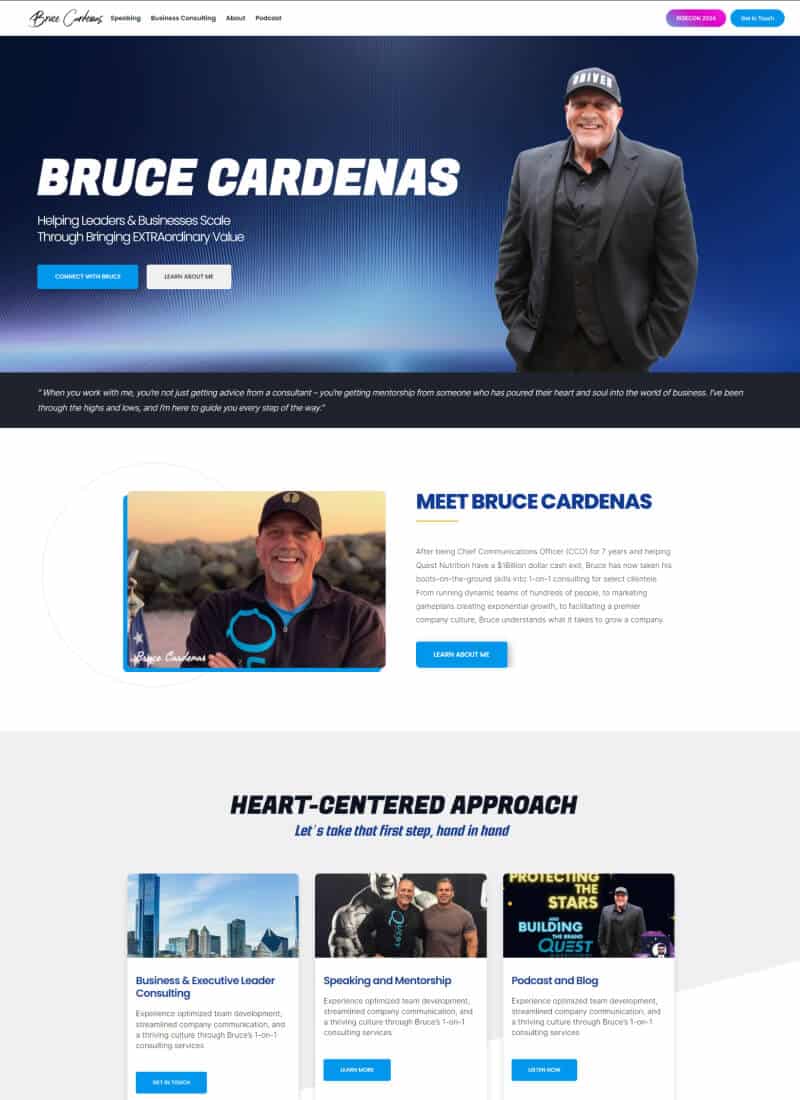
At some point, every business owner looks at their website and wonders: "Is it time for a redesign?" Maybe you saw a competitor launch a slick new site. Maybe a customer mentioned your site feels outdated. Maybe you're just bored with it.
But here's the thing: a full redesign is a significant investment of time and money. Sometimes it's absolutely necessary. Other times, it's a knee-jerk reaction that won't actually solve the real problem. Let's break down when you should pull the trigger and when you should hold off.
Signs You Actually Need a Redesign
There are legitimate reasons to start from scratch, and they usually come down to one thing: your website is actively hurting your business.
If your site looks like it was built in a different era, that's a problem. Design trends evolve, and visitors can spot an outdated site in seconds. We're not talking about chasing every trend. We're talking about looking current, professional, and credible. If your site still has a stock photo slider from 2017, it's time.
If your bounce rate is sky-high and your conversion rate is rock-bottom, your design might be the culprit. A confusing layout, buried calls-to-action, or a cluttered homepage can drive people away before they ever learn what you offer.
If your site was built on outdated technology or a platform that's no longer supported, a redesign isn't optional. It's necessary. Security vulnerabilities, broken features, and compatibility issues only get worse with time.
The Mobile Problem You Can't Ignore
Pull up your website on your phone right now. Seriously, do it. If the text is tiny, the buttons overlap, or you have to pinch and zoom to read anything, you need a redesign yesterday.
Mobile traffic accounts for the majority of web visits in almost every industry. Google ranks mobile-friendly sites higher. Users abandon non-responsive sites immediately. This isn't a nice-to-have feature anymore. It's the baseline.
If your site was built before responsive design was standard practice, or if the mobile version was tacked on as an afterthought, a ground-up rebuild with a mobile-first approach is the right call.
Speed Kills (or Saves) Your Business
A slow website is a broken website. If your pages take more than three seconds to load, you're losing a significant chunk of your visitors before they ever see your content.
Sometimes speed issues can be fixed without a full redesign. Compressing images, removing unnecessary plugins, or switching to better hosting can work wonders. But if your site is bloated with years of accumulated code, outdated frameworks, and layers of quick fixes stacked on top of each other, it might be faster and cheaper to start clean.
Run your site through a speed test. If the results are ugly and the fixes are endless, that's your answer.
When You Should Leave It Alone
Now for the other side. There are plenty of bad reasons to redesign a website, and jumping in for the wrong reasons wastes money and momentum.
If you just launched your site within the last year or two, pump the brakes. A new site needs time to mature. You need data. You need to see how real visitors are using it before you decide what's working and what isn't. Redesigning based on gut feelings instead of evidence is a mistake.
If you're redesigning because you're personally bored with the look, that's not a business reason. Your customers don't care that you've stared at your homepage a thousand times. They care that it works, loads fast, and helps them find what they need.
If a competitor just launched a flashy new site and you feel like you need to keep up, slow down. A competitor's design choices have nothing to do with your audience, your goals, or your brand. Focus on what's working for you, not what someone else is doing.
The Tune-Up Alternative
Most of the time, what your website really needs isn't a total rebuild. It's a strategic tune-up. Small, targeted improvements that address specific problems without throwing everything out and starting over.
Maybe your homepage needs a clearer headline and a stronger call-to-action. Maybe your service pages need better copy. Maybe you just need to speed things up and fix some broken links. These changes can have a massive impact without the cost and timeline of a full redesign.
Think of it like your car. You don't buy a new one every time the oil needs changing. Regular maintenance keeps it running well for years. Your website works the same way.
The bottom line: redesign when your site is genuinely holding your business back. Optimize when it just needs some attention. And whatever you do, make decisions based on data and customer feedback, not feelings. Your website is a business tool. Treat it like one.